

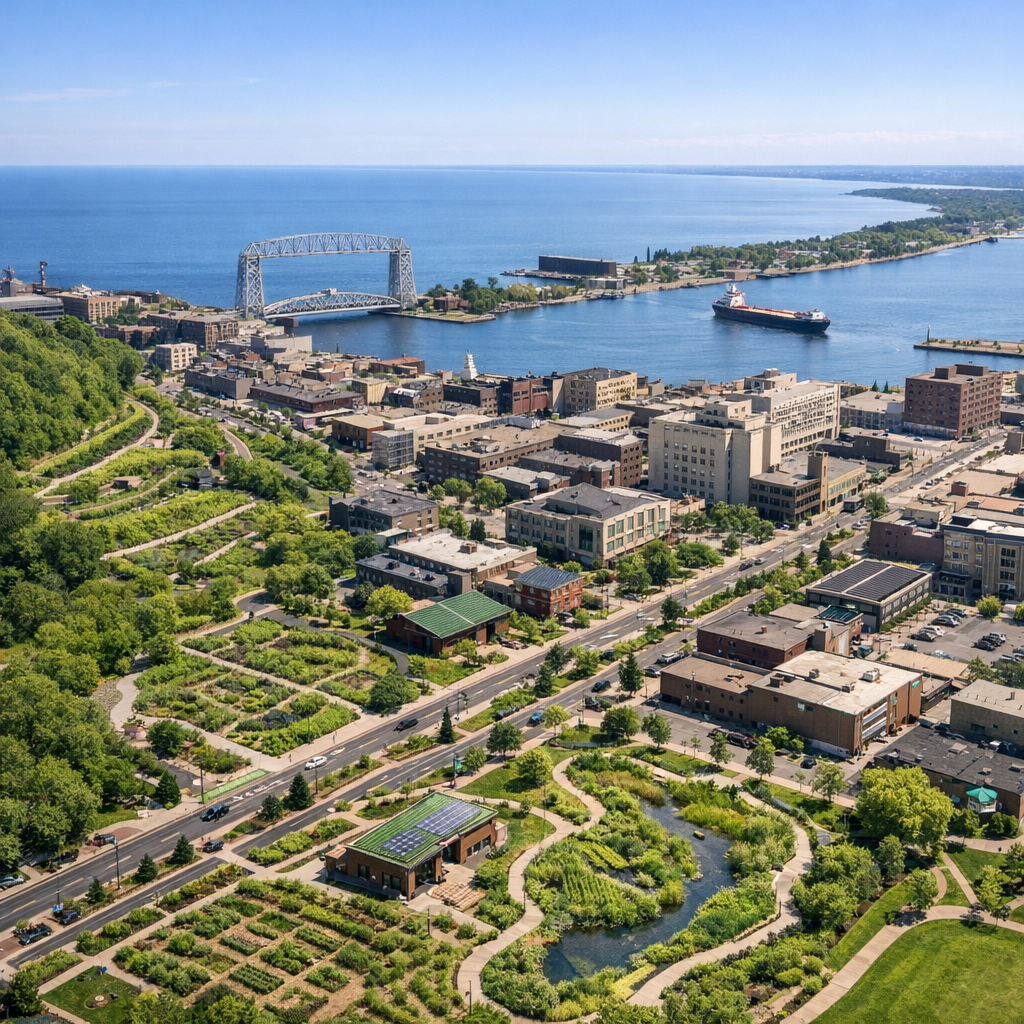
Duluth, traditionally known for its cool climate and proximity to Lake Superior, is experiencing notable changes in its weather patterns. Over the past several decades, the city has seen a significant increase in average temperatures and precipitation levels.
Rising Temperatures and Changing Precipitation
From 1950 to 2015, Duluth’s average annual temperature rose by 1.8°F, accompanied by an 11.1% increase in annual precipitation. The city has also witnessed a 37% uptick in heavy precipitation events during this period. These shifts have led to more frequent and intense weather occurrences, such as the 2012 flood that caused over $100 million in damages.
City Initiatives for Climate Resilience
In response to these changes, Duluth adopted its inaugural Climate Action Work Plan (CAWP) in early 2022. This plan outlines strategies to reduce greenhouse gas emissions and enhance the city’s resilience to climate impacts. Key components include:
- Implementing green infrastructure projects to manage stormwater and reduce flood risks.
- Upgrading aging stormwater systems to handle increased precipitation.
- Promoting energy efficiency and renewable energy adoption to achieve carbon neutrality by 2050.
Community Engagement and Future Outlook
Community involvement is crucial for the success of these initiatives. Residents are encouraged to participate in local sustainability programs and stay informed about climate adaptation efforts. As Duluth continues to adapt to its evolving climate, collaborative efforts between the city and its residents will be essential in building a resilient and sustainable future.