

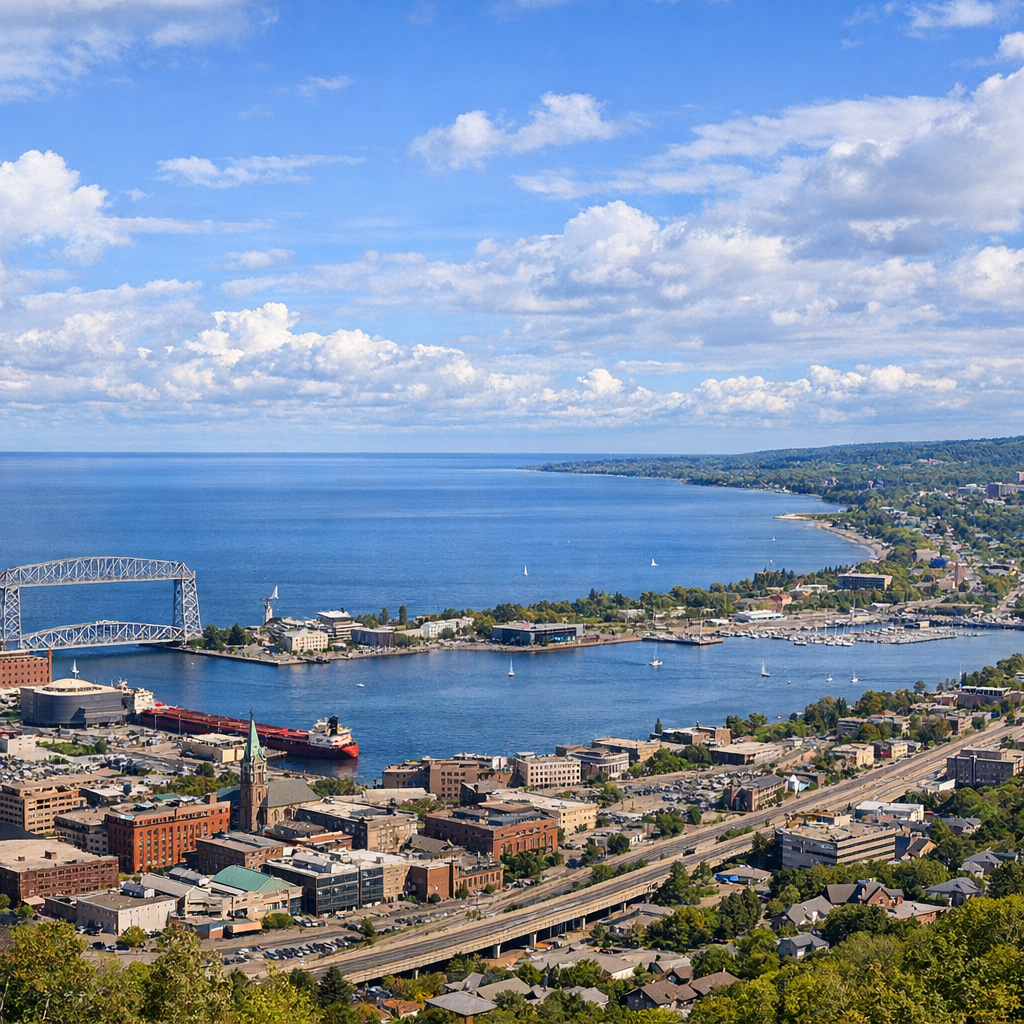
Duluth, Minnesota, offers a distinctive climate shaped by its northern location and proximity to Lake Superior. Residents and visitors experience a range of weather conditions throughout the year, each season bringing its own character to the city.
Winter: Cold and Snowy
Winters in Duluth are notably cold and snowy. Average high temperatures remain below freezing for approximately 100 days each year, with lows frequently dipping below 0°F. Snowfall is substantial, averaging around 90 inches annually. The presence of Lake Superior can lead to lake-effect snow, particularly when storms pass south or east of the city, resulting in significant snowfall along the shoreline.
Spring: Gradual Warming
Spring arrives slowly in Duluth. March and April often bring fluctuating temperatures, with lingering snow and occasional rain. The lake’s cold waters can cause foggy conditions as warmer air moves in, leading to damp and cool days along the waterfront.
Summer: Mild and Pleasant
Summers are mild and comfortable, with average high temperatures in July reaching around 77°F. The lake acts as a natural air conditioner, keeping temperatures cooler compared to inland areas. This makes Duluth a popular destination during the warmer months.
Fall: Crisp and Colorful
Autumn brings cooler temperatures and vibrant foliage. September and October see average highs ranging from the mid-60s to low 50s. The city’s numerous parks and trails offer picturesque views of the changing leaves, attracting many outdoor enthusiasts.
Lake Superior’s Influence
Lake Superior plays a significant role in Duluth’s climate. It moderates temperatures, leading to cooler summers and slightly warmer winters compared to areas further inland. However, the lake also contributes to increased humidity and can cause sudden weather changes, including fog and lake-effect snow.
Understanding these patterns helps residents and visitors prepare for the diverse weather conditions that define life in Duluth.